
A complete guide to understanding how injectable testosterone works, who it helps, and how it compares to pellets
Testosterone is one of the most influential hormones in the body. When it slips out of balance
you feel it everywhere: fatigue, lower motivation, muscle loss, mood shifts, and changes in
libido are all common signs that deeper root causes may be at play. Research shows that
symptoms can be just as important as labs when identifying true hypogonadism (Bhasin et al.,
2018).
A functional medicine approach treats these symptoms as messengers…signals that your
hormonal network, metabolism, or nervous system may need targeted support. Testosterone
injections can be incredibly effective, but they work best when paired with a whole-body strategy
that looks at sleep, nutrition, stress, gut health, thyroid function, and inflammation.
What Testosterone Does in the Body
Testosterone supports energy, muscle mass, strength, motivation, metabolism, bone density,
sexual health, and emotional resilience. When levels fall, people often experience:
- Weaker recovery
- Brain fog or trouble concentrating
- More abdominal fat
- Mood swings or irritability
- Low libido
- Reduced vitality
Clinical guidelines confirm that low testosterone is linked with reduced physical performance,
decreased well-being, and metabolic dysfunction (Bhasin et al., 2018).
Why Testosterone Decreases
Common contributors include:
- Chronic stress and elevated cortisol
- Poor sleep (even one week of sleep restriction lowers testosterone)
- Nutrient deficiencies
- Thyroid dysfunction
- Blood sugar dysregulation or insulin resistance
- Inflammation
- Certain medications
- Excess body fat
- Environmental toxins
A functional medicine provider evaluates these root causes because correcting them helps
optimize therapy response.
What Injectable Testosterone Is
Injectable testosterone typically comes in esterified forms like testosterone cypionate or
enanthate. The ester slows its release into the bloodstream, allowing stable absorption over
days. Once injected, the body removes the ester and activates the hormone.
Most people dose weekly or every 7–10 days, while some do micro-dosing every 3–4 days for
smoother levels.
Research shows injectables give excellent control over hormone levels and are easily adjusted and is one of the biggest advantages compared with pellets (Arthurs et al., 2020).
How Functional Medicine Decides if Injections Are Needed
Assessment includes:
- Symptoms: energy, mood, libido, sleep, training performance
- Comprehensive labs: total T, free T, SHBG, estradiol, DHEA, cortisol, thyroid markers,
insulin, inflammation - Lifestyle review: stress, sleep, movement, gut health, toxin exposure
- Root cause analysis: addressing the why, not just the number
This ensures hormone therapy supports the whole endocrine system instead of creating new
imbalances.
Benefits People May Experience
When testosterone is clinically low and therapy is appropriate, research shows improvements
across:
- Energy and vitality
- Motivation and drive
- Muscle strength and recovery
- Body composition
- Mood stability
- Libido
- Insulin sensitivity (Corona et al., 2014)
These benefits amplify when combined with strength training, protein-forward nutrition, and
optimized sleep.
Possible Side Effects
Injectable testosterone is safe when monitored, but can cause:
- Acne
- Water retention
- Mood shifts
- Higher red blood cell count
- Estrogen fluctuations
- Fertility changes
Routine labs help guide dosage, safety, and symptom stability.
Injectable Testosterone vs Testosterone Pellets
Both deliver bioidentical testosterone, but how they behave is completely different.
Injectable Testosterone
Activated once the ester bond is enzymatically cleaved. Levels rise after injections and decline gradually.
| Pros | Cons |
| Precise dose control Easy to adjust Lower cost Reversible | Weekly or frequent injections Potential for peaks/dips if spaced too far apart |
Pellets
Inserted under the skin during a small procedure, dissolving slowly over months.
| Pros | Cons |
| No weekly injections Stable release curve | Hard to adjust if dose feels too high or too low Early peaks are common More costly Minor surgical procedure Risk of pellet extrusion |
Clinical research confirms injections provide superior adjustability and responsiveness, especially when symptoms or labs shift (Arthurs et al., 2020).
Functional Medicine Perspective
Functional medicine values adaptability, precision, and personalization.
Injectables provide:
- Rapid dose modification
- Lower risk of long-term imbalance
- Better ability to respond to thyroid changes, stress changes, or estrogen sensitivity
- Strong data for metabolic, mood, and body composition support
Pellets may be helpful for convenience, but lack the flexibility needed for complex cases or
patients with shifting hormone needs.
What This Means for Your Hormone Health
Testosterone injections can be a powerful, life-changing therapy especially when symptoms
and labs align with true deficiency. They work best when paired with whole-body strategies that
support sleep, stress, gut health, thyroid function, nutrition, and muscle mass.
Pellets can work well for some individuals, but they simply do not offer the same precision,
metabolic control, or adjustability that many functional medicine cases require.
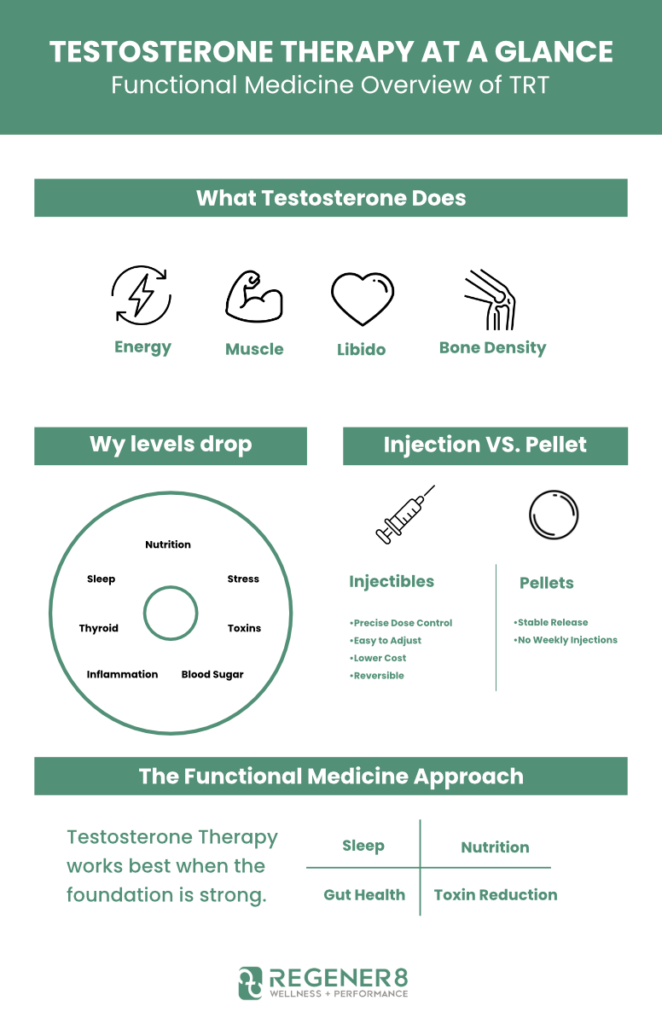
Infographic
References
Bhasin, S., et al. (2018). Testosterone therapy in men with hypogonadism: An Endocrine
Society clinical practice guideline. The Journal of Clinical Endocrinology & Metabolism, 103(5),
1715–1744. https://doi.org/10.1210/jc.2018-00229
Arthurs, J. M., et al. (2020). Comparison of testosterone replacement therapy via subcutaneous
pellets versus intramuscular injections. The Journal of Sexual Medicine, 17(3), 549–558.
https://doi.org/10.1016/j.jsxm.2019.12.016
Corona, G., et al. (2014). Testosterone therapy and cardiovascular risk: Meta-analysis of
interventional studies. The Journal of Sexual Medicine, 11(8), 1573–1592.
https://doi.org/10.1111/jsm.12552